Adaptation to change, workload, other stresses, and interpersonal differences bring out the worst in us – toxic behaviour. We all tend to master toxic behaviours and we are all experiencing them. The sad thing is that toxic behaviour spreads fast in relationships, especially in marriage, but also in the workplace, or in the family and beyond. Watch out before it goes too far!
In this blog, I will discuss the “Four Horsemen of the Apocalypse” or the four toxic behaviours in relationships, i.e. criticism, contempt, defensiveness, and stonewalling. And, more importantly, share what you should practise instead.
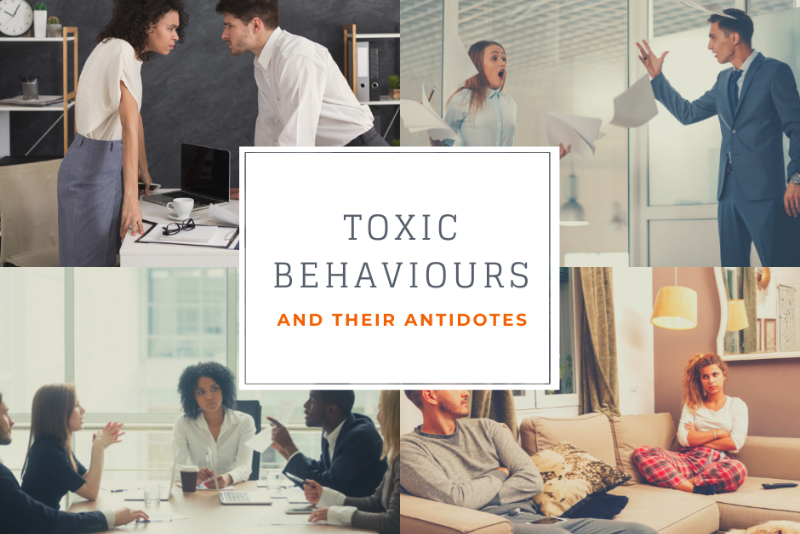
Four Toxic Behaviours
Dr John Gottman has described the four toxic behaviour styles in relationships. His work focus on spousal relationships but the same toxic behaviour patterns are seen in the office too:
1. Criticism
Criticism refers to pointing fingers and blaming colleagues, boss, partner, or others. It is about personal attacks. Criticism makes others feel assaulted, rejected and hurt.
2. Contempt
The toxic behaviour of contempt is the most poisonous and includes disgust and an attitude of being superior to the other. It includes using sarcastic or hostile humour, cynicism, and expressing disgust by different physical gestures such as eye-rolling. It is often a result of long-term resentment and may advance to verbal abuse.
3. Defensiveness
Defensiveness is about using a shield to bounce back any complaints, not accepting any fault in self. As a matter of fact, it is another form of blaming. Being defensive will just accelerate conflict.
4. Stonewalling
The toxic behaviour of stonewalling is about disengaging, “putting the stonewall in-between”, giving the other “a silent treatment”, or in the milder case simply not expressing your own needs or wants.
What to do instead?
We are responsible for our own behaviour. By learning non-toxic communication, we may diffuse toxic behaviour. The starting point is to identify the toxic behaviours in your conflict discussions – what you use yourself and what the other person resorts to. This is key for eliminating toxicity and replacing it with antidotes i.e., healthy communication. You will be surprised how effectively you may improve your relationships!
Below are a few antidotes for diffusing toxic behaviours:
1. An Antidote for Criticism
Request without blame. Focus on the matter, not the person. Avoid using “you” statements. Communicate your needs and wants assertively: “The report was due last week. I need it for quality assurance and submission.” Instead of piling up stuff and then bursting out with complaining: “You agreed to submit your report by Friday, but you didn’t. You are always late! Because of you we are all in trouble. “.
2. An Antidote for Contempt
Express your feelings and get back to the matter. The person using contempt may not be aware of it. “Hey, take it easy. I am really offended. Let’s rather discuss how we can finalise the report that is required.” Instead of sarcasm: “Have you ever considered a career as a dictator. You would be great.”.
3. An Antidote for Defensiveness
Defensiveness is often a reaction to receiving criticism. Press the pause button and try to understand better what the other person is saying. Can you find some truth in it? Try empathy, curiosity, and listening: “I’m sorry, I will quickly finalise it and email it to you in an hour. Am I often late with my submissions?” Instead of blaming back: “You yourself mix up and never communicate the deadlines clearly. Not to mention that you overload us with too many projects!”
4. An Antidote for Stonewalling
Get grounded and focus on the matter at hand. Despite feeling offended or not feeling secure, try your best to share your point of view. “I hear that the report is late. I was not aware of the deadline. How could I help resolve this?” Instead of keeping quiet and blaming the other in your mind.
Could you try out these antidotes?
Contracting
Should the negative and toxic behaviour already be a wide-spread problem in the office or a deep scar in your intimate relationship, reaching out for an external facilitator might be a solution. Whether you need an industrial psychologist, organisational coach, or couples’ counsellor depends on your specific situation.
Should you be in the lucky place of not having toxic behaviour in your team, focus on further enhancing preventative measures.
In his article at Forbes Simon S. Mass provides two tips to prevent toxic behaviour at the workplace. The first tip is to “hire for attitude and character, not only skills.” And the second tip is to “create a culture that fosters respect, kindness, and diversity”.
The same principles would also work well in choosing your partner and coming up with basic rules in your marriage and family!
Wishing you happy holidays. Leave workplace stresses behind, take first-class care of yourself, and practise healthy communication!

Pauliina Mapatha has twenty years of experience in both the government and non-profit sectors and is a certified life coach. She established her own consultancy company in 2006 and has found her passion for supporting individuals and organisations with change, transformation and wellness.
To contact coach Pauliina click here.